Skip to content
Shadow matching: everything with its silhouette
For the youngest ones, with drag and drop
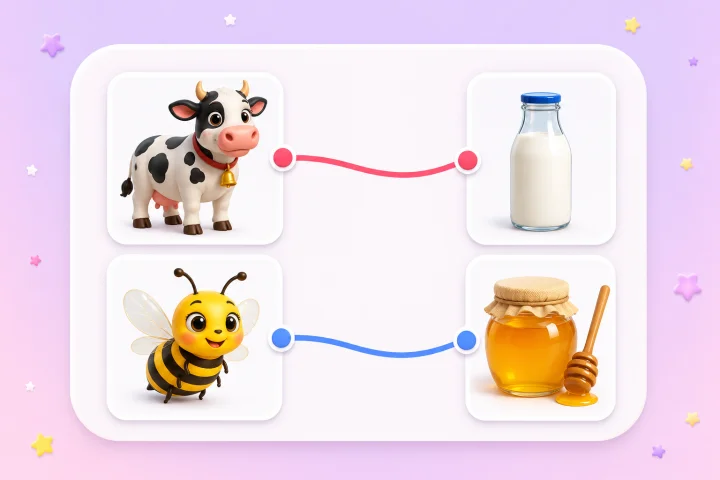
The shadows are on top and the pictures below. The child drags each picture onto the shadow with the same shape, and when it fits, the shadow fills with colour and a voice says the name in their language. It is one of the first games a two-year-old can finish on their own, because there is nothing to read and nothing to count: just the shape to look at.
It starts with three pictures per round and moves to four once the child has the idea. Eight rounds, then the celebration. There is no score and no clock, and getting it wrong costs nothing: the picture drifts back on its own and can be tried again as often as needed.
What the game practises
- Recognising an object by its shape alone, without the colour and detail that make it easy.
- Perceptual constancy: grasping that the black shape and the coloured picture are the same thing.
- Dragging and dropping with a finger — the gesture every other game here uses.
- Vocabulary: every match brings the name of the object, said out loud.
- Staying with one short task and finishing it, which at two is quite a lot.
It runs on desktop, tablet and phone, and can be projected on a classroom whiteboard to play together. No sign-up and nothing to download.
Frequently asked questions
What age is it for?
It is built for ages 2 and 3, when children start recognising shapes. The youngest play it with an adult beside them; from 4 they finish it on their own, quickly.
Does the child need to read?
No. There is not one word on the play screen: it is played by looking at shapes, and the voice says the name of each thing when the child gets it right.
What happens on a wrong try?
Nothing. The picture drifts back and can be tried again. No score, no timer, no error sound: at this age getting it wrong is how learning happens.
Does it work with a finger on a tablet?
Yes, that is exactly what it is built for. You can also tap the picture and then its shadow, in case dragging is hard.
How many different shadows are there?
Forty: animals, vehicles, clothes, food and things around the house. The game shows nearly all of them before repeating any.
Shadow Matching is one of the 6 shape games on Little Kids Games.